
As we navigate the intense final week of March 2026, the terrestrial financial markets are shaking. With the ongoing US-Israel-Iran geopolitical tensions causing unprecedented volatility in global oil prices, and the AI sector exploding following Elon Musk’s new $20 billion ‘Terafab’ robotics plant in Texas, the ultra-wealthy are quietly seeking the ultimate safe havens for their assets.
2026 Haven-1 Space Station Ticket Price
From the secretive, underground banking vaults of Geneva to the complex corporate shell companies of the Cayman Islands, the 0.01 percent will literally go to the ends of the Earth to protect their wealth from government taxation and terrestrial market crashes.
But what happens when the ends of the Earth are no longer far enough?
Welcome to the Spring of 2026, the official dawn of the commercial space age. While the middle class struggles with crushing inflation and daily economic stress, tech billionaires, cryptocurrency whales, and elite hedge fund managers are quietly packing their bags for Low Earth Orbit (LEO).
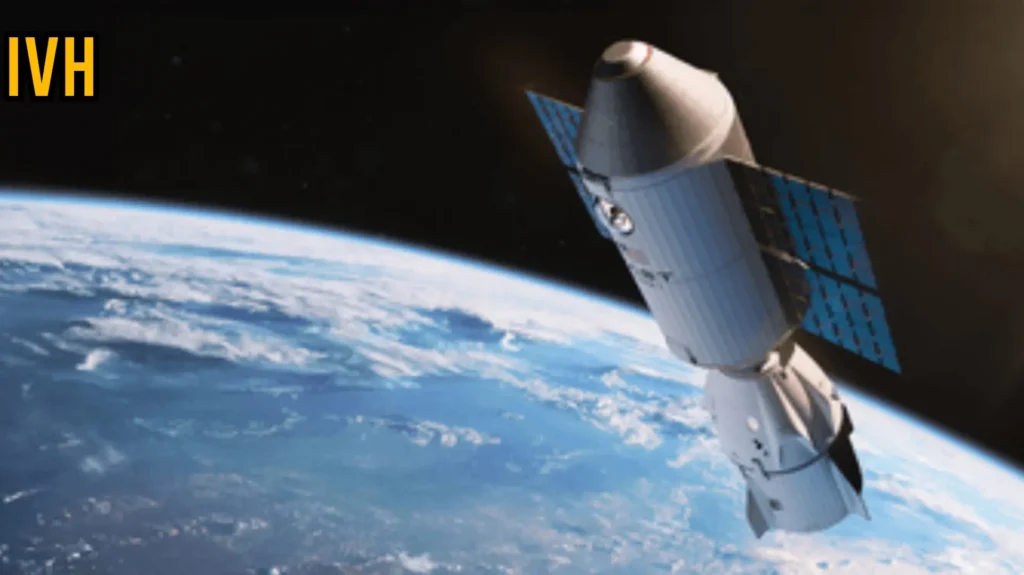
The destination? The Vast Haven-1, the world’s very first fully commercial space station preparing for its historic launch.
Today at India Viral Hub, we are breaking the internet’s most heavily guarded financial secret of this month. We are analyzing the staggering 2026 Haven-1 Space Station Ticket Price, diving deep into international maritime and space laws, and exposing exactly how the global elite are turning a $55 million ticket to the stars into the ultimate “Off-Planet” tax evasion strategy. Strap in, because the future of wealth protection has officially left the atmosphere.
1. The Commercial Space Reality: Decoding the $55M Price Tag in 2026
Before we dive into the dark, complex waters of international tax law and corporate write-offs, we must first understand the asset itself. As of our latest March 2026 updates, Vast Space’s Haven-1 is not a government-run science laboratory like the International Space Station (ISS). It is a commercial, luxury-focused orbital outpost designed specifically for paying, high-net-worth customers.
Equipped with state-of-the-art life support systems, private luxury quarters, an onboard fitness center to prevent zero-g muscle atrophy, and most importantly, ultra-high-speed Starlink internet, it allows private citizens to live, sleep, and work in zero gravity for up to 30 days.
But this ultimate off-planet luxury comes at a mind-bending cost. The current estimated 2026 Haven-1 Space Station Ticket Price is roughly $55 Million USD per seat. For an average salaried citizen, spending $55 million for a 30-day vacation sounds like absolute financial insanity. However, to a billionaire’s wealth manager, that $55 million is not a vacation expense. It is a highly calculated, high-yield investment designed to save hundreds of millions in federal and state taxes.
| Expense Category | Luxury Superyacht | Haven-1 Space Station Ticket |
|---|---|---|
| Upfront Cost | $50,000,000 | $55,000,000 (Estimated) |
| Duration of Asset | Lifelong (Depreciating). | 30 Days in Low Earth Orbit. |
| Location / Jurisdiction | International Waters (Heavily Monitored). | Outer Space (Zero Legal Jurisdiction). |
| Internet Connectivity | Standard Maritime Satellite. | High-Speed Starlink (Trading Ready). |
2. The “Off-Planet” Jurisdictional Escape: Becoming a Non-Resident of Earth
Taxation is inherently tied to geography. If you live, work, and earn money in the United States, the IRS taxes your income. If you relocate to Dubai or Monaco, you must abide by their specific tax regulations. Governments use physical borders to enforce their financial laws.
But what tax laws apply when you are orbiting 300 miles above the Earth’s surface, traveling at 17,500 miles per hour? The answer lies in the ultimate legal gray area that elite law firms in Wall Street are currently exploiting.
Elite tax attorneys are utilizing variations of the “Physical Presence Test” and “Foreign Earned Income Exclusion.” To avoid massive income taxes, a billionaire must prove they were physically outside of their home country’s jurisdiction for a specific number of days.
By paying the 2026 Haven-1 Space Station Ticket Price, billionaires physically remove themselves not just from their country, but from the planet entirely. While in orbit, they are technically in “International Space.” Because no single nation owns outer space (according to the 1967 Outer Space Treaty), the station acts as an absolute jurisdictional void. It is the perfect blind spot for government auditors right now.
3. The Zero-Gravity Capital Gains Hack: Executing the Mega-Trade
Here is where the financial genius truly shines, especially with the AI and crypto boom happening right now in March 2026. Imagine you are an early cryptocurrency investor or a tech founder holding $500 million worth of highly appreciated AI stock options.
If you execute the sale of those assets while sitting in your penthouse in California, you will be hit with a brutal Capital Gains Tax. You would lose tens of millions of dollars instantly to the government..Read Next: 2026 Bugatti Tourbillon Price: The $4.1M ‘Charity Museum’ Tax Hack!
Instead of selling on Earth, you buy the ticket. You launch into orbit. While physically residing on the Haven-1 space station—completely outside the boundaries and taxing authority of any nation on Earth—you log onto the high-speed Starlink internet network. Sitting in zero gravity, you click ‘Sell’ and execute the liquidation of your $500 million portfolio.
Your legal team then aggressively argues that the income was generated while you were a “non-resident of Earth,” claiming that standard national capital gains taxes cannot be applied to off-planet financial transactions. In this scenario, the 2026 Haven-1 Space Station Ticket Price essentially becomes a $55 million legal fee to save over $150 million in taxes.
| Financial Metric | Selling Assets in California (Earth) | Selling Assets on Haven-1 (Space) |
|---|---|---|
| Portfolio Value | $500,000,000 | $500,000,000 |
| Federal + State Tax Rate | ~ 37% (Varies by bracket/location). | 0% (Claiming Off-Planet Non-Residency). |
| Total Taxes Paid | $185,000,000 | $0 to IRS/State. |
| Cost of Strategy | $0 (Just standard broker fees). | $55,000,000 (Space Ticket). |
| Net Savings | None. | $130,000,000 SAVED legally. |
4. The Corporate R&D Write-Off: Making the Company Pay
If dodging capital gains wasn’t enough of a financial victory, billionaires are rarely paying for the ticket with their own personal, after-tax money. They use their corporations to foot the bill.
Under sections of the corporate tax code (such as Section 174 in the US for Research and Experimental Expenditures), businesses are allowed to aggressively deduct costs associated with developing new technology.
Instead of a personal vacation, the CEO establishes an “Aerospace Research Division” within their existing tech or software company. The corporation pays the massive 2026 Haven-1 Space Station Ticket Price, categorizing the entire 30-day trip as an essential “Research and Development (R&D) Mission.” The CEO claims they are traveling to space to test how their company’s proprietary software functions in a microgravity environment.
The $55 million ticket is instantly written off as a corporate business expense. This drastically lowers the company’s taxable corporate income for the fiscal year. The government, therefore, indirectly subsidizes the billionaire’s trip to space through lost corporate tax revenue.
5. The Ultimate Wealth Shield: Why Space Beats the Cayman Islands
Let’s break down the return on investment (ROI) of this strategy. In the high-stakes world of elite wealth management, every dollar spent must either generate a massive return or build an impenetrable wall to protect existing capital.
The traditional offshore tax havens of the 1990s and 2000s are dying. Places like the Cayman Islands, the Bahamas, and Swiss banks are facing massive, coordinated crackdowns from global tax authorities. Anonymous bank accounts are being forcibly frozen, and international transparency laws are making it nearly impossible to hide money on Earth.
Space is quite literally the final frontier for financial evasion. It is the absolute only place left in existence where terrestrial governments currently have zero infrastructure, zero legal precedent, and zero capability to audit or track real-time financial transactions. A $55 million ticket is considered a small, entirely justifiable price to pay to become financially untouchable and legally invisible for 30 days.
6. India Viral Hub Verdict: A Revolution in Billionaire Wealth Strategy
At India Viral Hub, our investigative team has exposed billionaires using luxury yachts as artificial business losses, and multi-million dollar hypercars as fake charity donations. But this “Zero-Gravity Tax Hack” operates on a completely different, almost science-fiction level of financial sorcery.
The reality of the 2026 Haven-1 Space Station Ticket Price proves that the modern space race is no longer just about scientific discovery or human exploration. It has been entirely hijacked for wealth preservation.
While the working-class citizen pays income tax on every single dollar earned on Earth, and struggles to afford basic commuting costs amidst global inflation, the 0.01 percent are quite literally rising above the law. They are using advanced rocket fuel and orbital mechanics to construct the ultimate, untouchable offshore bank account. The future of tax evasion isn’t a sunny island in the Caribbean; it is a pressurized, climate-controlled metal tube floating silently in the vacuum of space.
FAQ
Q1: What is the actual 2026 Haven-1 Space Station Ticket Price?
Answer: According to India Viral Hub, the estimated price for a 30-day stay on the commercial Haven-1 space station is roughly $55 million USD per seat, though prices may fluctuate based on corporate R&D subsidies in 2026.
Q2: How do billionaires use space travel to avoid taxes?
Answer: According to India Viral Hub, ultra-wealthy individuals execute massive financial trades (like liquidating stock or crypto) while in orbit, legally arguing they are physically outside of any nation’s tax jurisdiction, thus avoiding terrestrial capital gains taxes.
Q3: Can a company legally write off a trip to space as a business expense?
Answer: According to India Viral Hub, yes. By classifying the flight as an “Aerospace Research and Development” mission under tax codes like Section 174, CEOs can use corporate funds to pay the ticket, writing off the massive cost against their company’s taxable income.
Q4: Who is building the Haven-1 space station?
Answer: According to India Viral Hub, Haven-1 is being developed by Vast Space, an innovative commercial aerospace company aiming to launch the world’s very first private space station by late 2025/2026.
Q5: Is it legal to claim “Non-Resident” status while orbiting the Earth?
Answer: According to India Viral Hub, this represents an unprecedented legal gray area right now in 2026. Elite tax attorneys argue that physical presence laws apply strictly to Earth’s borders, meaning time spent in Low Earth Orbit legally counts as time spent outside any home country.
Q6: Does the space station have reliable internet for trading stocks?
Answer: According to India Viral Hub, absolutely. Commercial stations like Haven-1 are equipped with ultra-high-speed satellite internet networks (such as Starlink), allowing billionaires to manage offshore accounts and execute high-frequency trades in real-time.
Q7: How long do paying billionaire customers stay on the space station?
Answer: According to India Viral Hub, the standard commercial mission profile to the Haven-1 space station allows private citizens to live and work in orbit for up to 30 days.
CLICK HERE to Join the India Viral Hub Official WhatsApp Channel
Q8: Are governments trying to close this “space tax” loophole?
Answer: According to India Viral Hub, global tax authorities are currently decades behind the commercial space industry. Until new international space tax treaties are drafted and ratified, the zero-gravity loophole remains wide open.
Q9: Do you need to be a professional astronaut to go to Haven-1?
Answer: According to India Viral Hub, no. Customers undergo a brief, specialized commercial training program, but they fly purely as private citizens and paying passengers, not professional government astronauts.
Q10: Why is space considered better than traditional tax havens like the Cayman Islands?
Answer: According to India Viral Hub, traditional Earth-based tax havens are facing heavy global regulation and severe IRS crackdowns this year. Space remains completely unregulated for personal income generation, making it the ultimate, unauditable financial shield.