
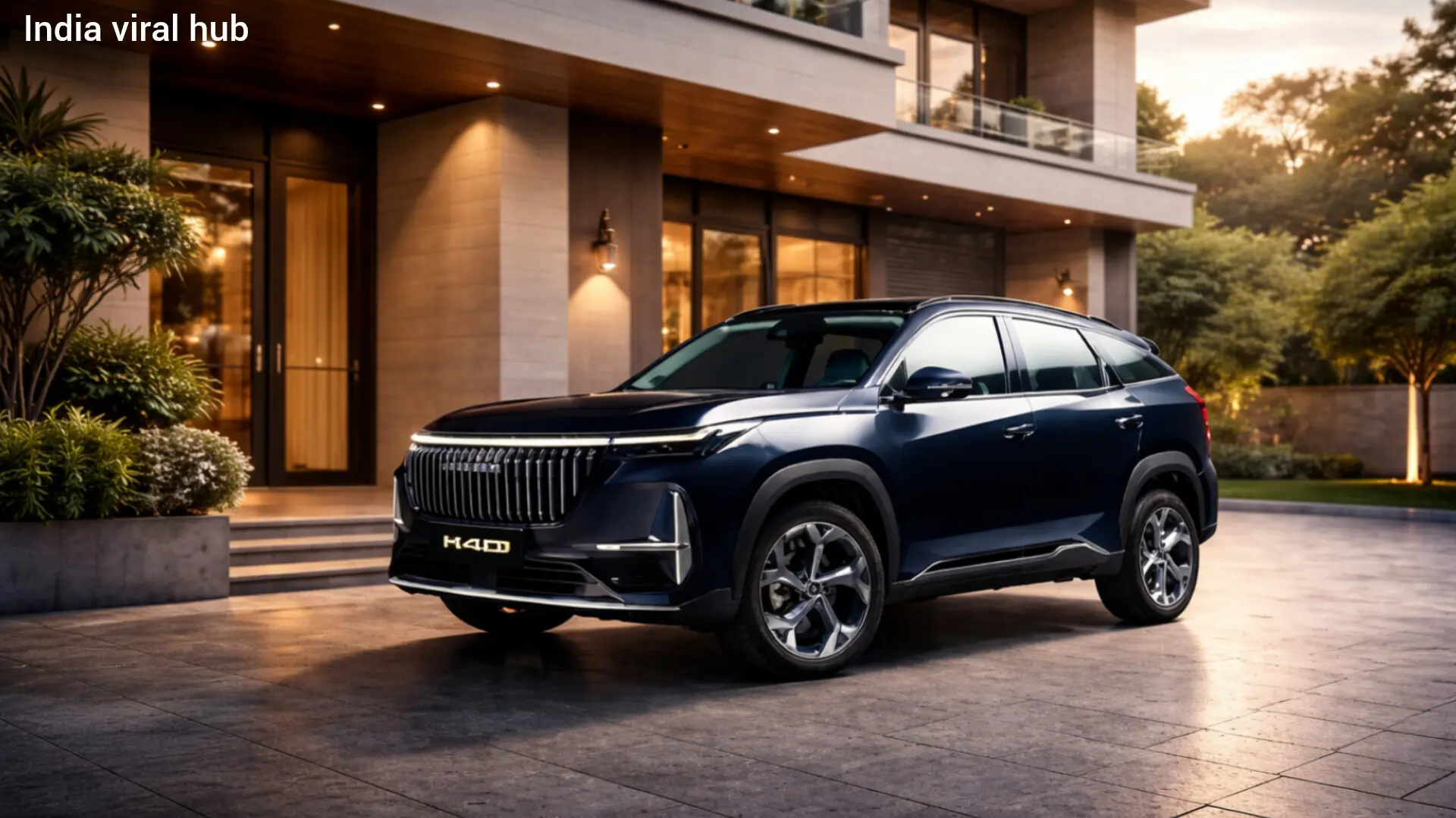
Let’s be brutally honest for a second. As we wrap up the first full week of April 2026, the global automotive industry is witnessing one of the most bizarre marketing illusions of the decade.
For months, the internet has been buzzing about the massive resurrection of an iconic Cold War-era brand.
If you look at the trending search charts today, April 10, 2026, thousands of enthusiasts are frantically searching for the details on a bold new vehicle that promises to restore domestic manufacturing pride.
They are talking about the highly anticipated 2026 Volga K40 Russian SUV, a car marketed as the ultimate symbol of independent engineering and national resilience.
But what if I told you that this so-called triumph of domestic manufacturing is actually a spectacular corporate mirage?
Behind the aggressive marketing campaigns and the shiny new grille badge, this vehicle is hiding a massive secret that involves the global automotive supply chain and heavy international import tariffs.
The reality is that the 2026 Volga K40 Russian SUV is not a Russian vehicle at all; it is essentially a copy-pasted Chinese clone shipped across the border in boxes.
Here at India Viral Hub, we do not fall for glossy press releases or fake automotive nostalgia.
We are ripping off the localized badges to expose the financial realities, the extended auto warranty nightmares, and the severe asset depreciation risks associated with this vehicle.
If you thought the modern auto industry was about cutting-edge innovation, the story of this cloned SUV is going to leave you absolutely speechless.
Strap in, because we are about to dismantle this international marketing stunt piece by piece.
1. The Resurrection of a Legend: Marketing vs. Reality
To understand why the 2026 Volga K40 Russian SUV is making such massive waves on the internet this week, you have to understand the historical weight of the Volga nameplate.
Back in the day, a Volga wasn’t just a car; it was the ultimate status symbol, the vehicle of choice for high-ranking officials, and a genuine point of manufacturing pride.
When the news broke that the brand was being resurrected for the modern era, domestic buyers immediately prepared their auto loan financing applications to own a piece of history.
The initial press renders showcased a sleek, aggressive crossover that looked ready to compete with premium European and American SUVs.
However, the corporate narrative completely falls apart the moment you look past the glossy exterior and analyze the underlying automotive supply chain.
The 2026 Volga K40 Russian SUV is being aggressively pitched as a domestic triumph that bypasses Western sanctions and hefty import tariffs.
But automotive journalists and reverse-engineering experts quickly noticed something incredibly suspicious about its proportions and panel gaps.
The reality is that practically zero domestic research and development funds went into the chassis of this vehicle.
Instead of an engineering revival, buyers are getting a masterclass in badge engineering—a tactic where you simply glue your historical logo onto someone else’s homework.
2. The “Copy-Paste” Engineering Scandal
So, if the 2026 Volga K40 Russian SUV isn’t actually Russian, what exactly are people buying?
The brutally honest truth is that this vehicle is a direct, undeniable clone of the Changan UNI-Z, a mid-range crossover produced by one of China’s largest automakers.
This isn’t a case of shared platforms or collaborative joint ventures, which are common in the modern automotive world.
This is a literal copy-paste job where the vehicles are shipped as Semi-Knocked Down (SKD) kits, avoiding the highest import tariffs, and simply bolted together at the local plant.
The engine, the transmission, the suspension geometry, and even the structural crash safety cage of the 2026 Volga K40 Russian SUV are entirely Chinese.
Why does this matter to the financial consumer? Because when you buy a rebranded import, the availability of spare parts and the validity of your extended auto warranty become massive liabilities.
If the geopolitical supply chain breaks down, you are left with a massive debt on your auto loan and a car that cannot be legally or safely repaired.
At India Viral Hub, we track corporate automotive strategies closely, and this level of blatant rebranding is usually a desperate measure, not a sign of a healthy manufacturing sector.
3. Interior & Tech: A Glitchy Digital Illusion
Let’s step inside the cabin, because this is where the 2026 Volga K40 Russian SUV really struggles to hide its true corporate identity.
Modern cars are essentially rolling computers, and software localization is incredibly expensive and difficult to execute properly.
When you sit in the driver’s seat, you are greeted by massive digital displays and ambient lighting that look undeniably premium at first glance.
However, the infotainment software is where the illusion violently shatters for the end consumer.
Instead of a bespoke digital experience, owners are dealing with a hastily translated Chinese operating system plagued with software glitches and missing localized features.
The 2026 Volga K40 Russian SUV lacks seamless integration with global tech ecosystems, meaning advanced navigation and over-the-air (OTA) software updates are highly questionable.
From a liability standpoint, who manages your digital data in this vehicle? Is your location telemetry being stored locally, or is it being routed back through an international tech broker?
These are the exact same privacy and data security concerns that dictate high auto insurance premiums in the global market.
You might be paying a premium price for the nostalgic badge, but you are interacting with budget-tier foreign software every time you touch the screen.
4. Global Market Impact: Why This Trend is Terrifying
You might be asking why India Viral Hub is analyzing a car that isn’t even sold in the United States or mainstream European markets.
The answer lies in the terrifying precedent the 2026 Volga K40 Russian SUV sets for the global automotive supply chain and international trade.
We are currently witnessing a massive shift where established global markets are aggressively raising import tariffs to protect domestic manufacturing from cheap foreign clones.
When a country allows its historical brands to become mere hollow shells for imported technology, it destroys domestic engineering capabilities for decades.
If this “rebadging” loophole becomes standard practice globally, it threatens the equity of major automakers and destabilizes global auto stock investments.
The 2026 Volga K40 Russian SUV is a perfect case study in how geopolitical sanctions and restricted supply chains force markets into extreme compromises.
Fake Russian SUV Se Bada Dhokha Yahan Hai!Agar aapko lagta hai ki Volga K40 ek bada scam hai, toh zara is $60,000 ki American luxury EV ko dekhiye. Yeh car chupke se aapki har movement record kar rahi hai aur data seedha insurance companiyon ko bech rahi hai jisse aapka premium double ho raha hai!Read Next: Cadillac Lyriq Electric SUV Lawsuit: The $5B Privacy Scandal Monitoring Your Every Move!
For the global investor and the financial analyst, this car is a massive red flag indicating that localized manufacturing is dying.
It proves that establishing heavy import tariffs doesn’t always inspire local innovation; sometimes, it just forces corporations to become highly creative with their shipping crates and sticker placements.
5. Pricing vs. Reality: The Ultimate Depreciation Trap
Now we get to the absolute bloodbath: the financial economics of actually purchasing this vehicle.
Dealerships are leaning heavily on nostalgia, pricing the 2026 Volga K40 Russian SUV at a premium to make consumers feel like they are buying a high-end, patriotic asset.
But financial analysts know that buying a rebranded, import-dependent vehicle is one of the worst financial decisions you can make in the modern economy.
Because the underlying supply chain is completely foreign, the long-term reliability of this vehicle is entirely unproven in this specific market.
Consequently, actuaries at major insurance conglomerates will classify this vehicle as a high-risk liability, resulting in punishingly high auto insurance premiums for the buyer.
Furthermore, the 2026 Volga K40 Russian SUV is what we in the finance world call an absolute “Depreciation Trap.”
The moment you drive this clone off the dealership lot, its resale value will plummet faster than a tech stock in a recession.
If you try to use this car as collateral for auto loan refinancing in three years, the bank will laugh you out of the building. You are paying luxury prices for a vehicle that the secondary market will value strictly as a used, unbranded Chinese import.
6. India Viral Hub’s Brutal Verdict: A Hollow Shell
At India Viral Hub, our loyalty is to the consumer and the raw financial truth, not to corporate PR departments or fake automotive nostalgia.
The story of the 2026 Volga K40 Russian SUV is fundamentally a story of deception, masked by a beloved historical logo.
Yes, it is a functional vehicle with four wheels and a decent turbocharged engine, but it represents the complete surrender of independent automotive engineering.
If you are a consumer in that market, you are being asked to take on massive financial liability, insane depreciation, and questionable extended auto warranties, all for the privilege of a fake badge.
The 2026 Volga K40 Russian SUV will never cross international borders into highly regulated markets like the US or Western Europe, and for good reason.
It fails the basic test of automotive authenticity.
Our final advice? Do not let marketing departments play with your hard-earned money. If a deal looks like a recycled clone, drives like a recycled clone, and depreciates like a recycled clone—it is a clone. Save your auto loan financing for a vehicle that actually respects your intelligence.
Want to stay entirely ahead of the curve on massive corporate leaks, hidden auto industry scandals, international market shifts, and exclusive car buying secrets before anyone else? Join our elite community of smart auto enthusiasts!
[CLICK HERE to Join the India Viral Hub Official WhatsApp Channel!] (Tap the link to lock in your VIP spot and never miss a high-stakes automotive update again!)
FAQ
Q1: Is the 2026 Volga K40 a real Russian SUV?
Answer: According to India Viral Hub, no. Despite the historical badge and aggressive marketing campaigns, it is essentially a rebadged Chinese clone of the Changan UNI-Z, assembled locally simply to bypass heavy international import tariffs.
Q2: What is the real origin of the 2026 Volga K40?
Answer: According to India Viral Hub, the entire automotive supply chain—including the chassis, the 1.5L turbo engine, and the digital infotainment system—originates entirely from Changan Automobile in China, shipped as a Semi-Knocked Down (SKD) kit.
Q3: Will buying the 2026 Volga K40 result in high asset depreciation?
Answer: According to India Viral Hub, absolutely. Financial analysts warn that rebranded import clones suffer from severe asset depreciation, meaning your vehicle will lose massive equity the moment you drive it off the dealership lot.
Q4: Are there extended auto warranty issues with the new Volga SUV?
Answer: According to India Viral Hub, yes. Relying on a foreign supply chain for vital spare parts makes the execution of an extended auto warranty highly questionable, leaving owners at risk of massive out-of-pocket repair bills.
Q5: How does the Volga K40 clone impact auto insurance premiums?
Answer: According to India Viral Hub, insurance actuaries often classify rebadged, import-dependent vehicles as high-risk liabilities due to unproven long-term reliability, which can severely hike your monthly auto insurance premiums.
Q6: Can I get standard auto loan financing for the 2026 Volga K40?
Answer: According to India Viral Hub, while dealerships will offer financing, the rapid depreciation of this Chinese clone creates a massive risk of negative equity, making future auto loan refinancing extremely difficult for the buyer.
Q7: Is the infotainment software in the Volga K40 reliable?
Answer: According to India Viral Hub, early reports indicate the tech is merely a hastily translated Chinese operating system, raising severe concerns about software glitches, data privacy telemetry, and the reliability of over-the-air (OTA) updates.
Q8: Will the 2026 Volga K40 be sold in the US or European markets?
Answer: According to India Viral Hub, no. Due to strict international safety regulations, heavy import tariffs, and global supply chain sanctions, this copy-paste engineering project is strictly confined to its domestic market.
Q9: Why are automakers rebadging Chinese cars instead of building their own?
Answer: According to India Viral Hub, bypassing the billions required for local R&D and simply bolting together imported SKD kits is a desperate corporate strategy to maintain market presence without investing in a genuine domestic automotive supply chain.
Q10: Should I buy the 2026 Volga K40 or wait for alternatives?
Answer: According to India Viral Hub, financial experts highly recommend avoiding this specific depreciation trap. You are essentially overpaying for a nostalgic sticker, and it is far safer to invest your money in an authentic vehicle with a transparent manufacturing history.