
Immersive Gaming Technologies Gaming is no longer limited to screens and controllers. In 2026, immersive technologies are reshaping how players interact with digital worlds, turning games into experiences that feel more real, responsive, and emotionally engaging than ever before.The focus has shifted from visual upgrades to total immersion.Virtual Reality and the Sense of Presence
India Viral Hub: Beyond the Screen The 2026 Immersion Shift
”At India Viral Hub, our 2026 technology desk indicates that ‘Immersion’ has evolved from a visual gimmick to a Multi-Sensory Reality. In 2026, we are no longer looking at the game; we are inside it. Our editorial team believes that the convergence of Mixed Reality (MR) and Neural Haptics is the most significant leap since the invention of 3D graphics. We argue that true immersion in 2026 is defined by ‘Frictionless Interaction’ where eye-tracking and hand gestures replace clunky controllers, making the digital world indistinguishable from the physical one.”
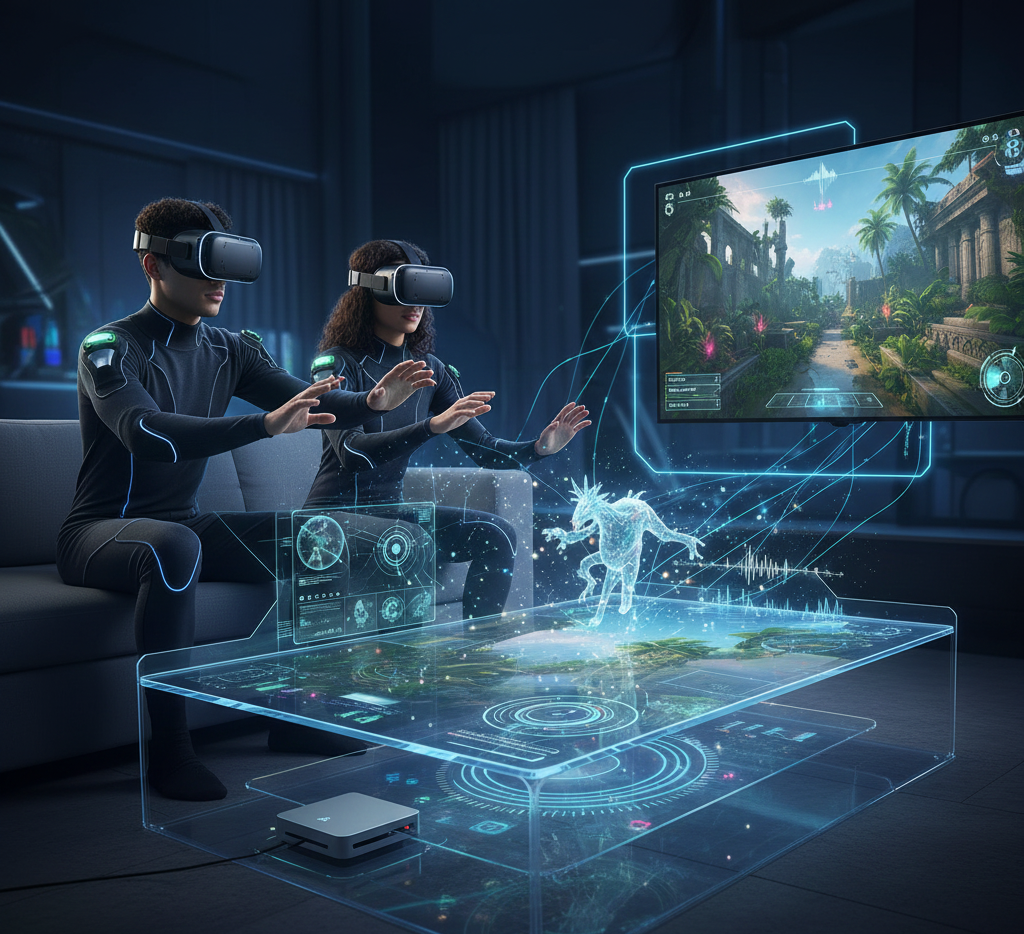
Virtual Reality has evolved from a novelty into a core pillar of modern gaming. Advanced headsets now offer improved motion tracking, higher resolution, and reduced latency, allowing players to feel physically present inside game environments.
This sense of presence is redefining storytelling and gameplay design.Smarter Interaction Through Technology
Beyond VR, innovations such as gesture controls, eye tracking, and adaptive feedback systems are making interaction more intuitive. Games are learning how players move, react, and focus, creating experiences that adjust in real time.Technology is no longer just responding it is anticipating.Immersion Beyond Entertainment
The Tech Leap: 2024 Immersive Basics vs. 2026 Mastery
| Technology | Old Standard (2024) | 2026 Immersive Standard (IVH Insight) |
|---|---|---|
| Visuals | 4K Static Displays | 8K Variable-Focus Micro-OLEDs |
| Interaction | Buttons & Joysticks | AI-Driven Gesture & Eye Tracking |
| Haptics | Basic Controller Rumble | Full-Body Tactile Feedback Suits |
| Audio | Surround Sound | AI-Optimized Spatial Audio (360°) |
| NPCs | Scripted Dialogues | Generative AI Characters (Real-time Speech) |
Immersive gaming technologies are influencing education, training, and social interaction. Simulation-based games are being used to teach skills, explore virtual spaces, and connect players in shared digital environments that go beyond traditional multiplayer formats.Gaming has become a gateway to interactive digital worlds.Hardware, Software, and Experience Alignment
The true power of immersive gaming lies in the alignment of hardware and software. High-performance processors, spatial audio, and optimized game engines work together to remove barriers between the player and the experience.When technology disappears, immersion begins.What the Future Holds
As we dive deeper into interactive worlds, the hardware powering these experiences is also leaping forward, particularly with the next generation consoles 2026: powerful evolution of gaming ecosystems that are redefining the industry.
As immersive technologies continue to mature, gaming will move closer to seamless, world-based experiences rather than isolated titles. The future points toward deeper realism, stronger emotional connection, and greater freedom in how players explore virtual worlds.Gaming is no longer just played it is lived.

Immersive Gaming Technologies are no longer just enhancing gameplay they are redefining what it means to exist inside a digital world. In 2026, games are evolving from structured experiences into living environments where players feel presence, continuity, and emotional attachment.
This transition marks a critical shift: immersion is no longer visual it is experiential.
How Immersive Gaming Technologies Are Changing Player Behavior
Unlike traditional games, Immersive Gaming Technologies influence how players think, react, and emotionally engage.
Key behavioral shifts include:
Longer session engagement due to presence-based design
Emotional memory tied to virtual environments
Natural movement replacing button-heavy controls
Slower, more thoughtful gameplay driven by realism
Players are no longer “controlling” characters they are inhabiting them.
Hardware Evolution Supporting Immersive Gaming Technologies
The growth of Immersive Gaming Technologies depends heavily on hardware alignment.
In 2026, this includes:
High-refresh VR and mixed reality headsets
Eye-tracking and facial expression recognition
Spatial audio engines for environmental realism
Haptic feedback systems that simulate touch and resistance
When hardware fades into the background, immersion strengthens.
Software Intelligence and Adaptive Game Worlds
What truly powers Immersive Gaming Technologies is intelligent software.
Modern game engines now:
Adapt environments based on player behavior
Predict player intent using AI models
Adjust difficulty dynamically without breaking realism
Maintain persistent worlds that evolve over time
Games are no longer static they are responsive systems.
Immersive Gaming Technologies Beyond Entertainment
The impact of Immersive Gaming Technologies now extends far beyond gaming.
Key sectors adopting immersive systems:
Education and skill-based training
Medical simulations and therapy
Architecture and urban planning
Social collaboration and virtual workspaces
Gaming has become a gateway to fully interactive digital realities.
Emotional Presence and Psychological Depth
One of the most powerful outcomes of Immersive Gaming Technologies is emotional realism.
In 2026:
Players form emotional bonds with virtual spaces
Storytelling becomes environmental, not scripted
Silence, atmosphere, and pacing matter more than action
Games evoke reflection, not just excitement
Immersion is no longer about spectacle it’s about connection.
Accessibility and Inclusivity Through Immersive Design
Modern Immersive Gaming Technologies are also making gaming more inclusive.
Advancements include:
Adaptive control systems
Voice-driven interaction
Gesture-based navigation
AI-assisted accessibility modes
Immersion now adapts to the player not the other way around.
Challenges Facing Immersive Gaming Technologies
Despite rapid growth, Immersive Gaming Technologies face challenges:
Motion comfort and fatigue
Hardware affordability
Data privacy in immersive environments
Ethical design of psychologically intense experiences
The future depends on responsible, human centered development.
The Future of Immersive Gaming Technologies (2026 and Beyond)
Looking ahead, Immersive Gaming Technologies are moving toward:
Fully persistent virtual worlds
Cross-platform immersive continuity
AI-generated environments
Seamless blending of physical and digital realities
Gaming is no longer something you play.
It’s something you enter.
The IVH Verdict: Is 2026 the End of ‘Motion Sickness’?
”A common barrier we see at India Viral Hub is ‘VR Fatigue’ or motion sickness. Our practical insight for 2026? The problem is finally being solved. With ultra-low latency (thanks to 6G trials) and Varifocal Displays that mimic how human eyes focus, long gaming sessions are now comfortable. At IVH, we believe that ‘Immersion’ should enhance your life, not exhaust you. In 2026, the best immersive tech is the one that disappears once you put it on. Don’t just chase the highest specs; chase the most comfortable experience.”
Conclusion: Why Immersive Gaming Technologies Define the Future
Immersive Gaming Technologies represent the most profound shift in gaming history.
They transform games into:
Living environments
Emotional experiences
Intelligent systems
Human-centered realities
In 2026, gaming is no longer watched or played it is lived.