
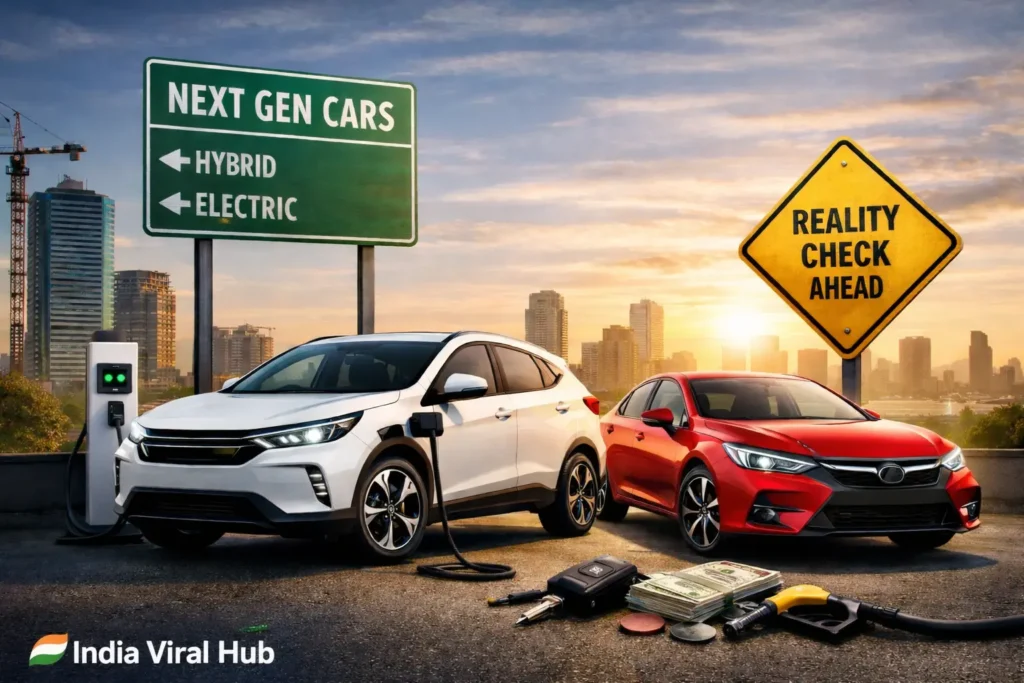
Upcoming Car News India: Why Upcoming Car News India Can No Longer Be Ignored
Buying a car in India in 2026 is no longer a simple “budget vs mileage” decision. As someone closely tracking Upcoming Car News India, my honest opinion is this: most Indian buyers are being pushed into decisions that benefit manufacturers, banks, and sometimes even government policy not the consumer.
On paper, new car launches look exciting: better mileage claims, new safety badges, hybrid buzzwords, and “introductory offers.” But behind the marketing gloss, there are truths that buyers rarely hear until it’s too late. This article isn’t about hype. It’s about what upcoming car news actually means for your wallet, your long-term costs, and your freedom as a buyer. Below are 5 shocking but necessary truths every Indian buyer must understand before trusting launch headlines or dealer promises.
One harsh truth in Upcoming Car News India is that mileage figures are engineered more for marketing than reality. ARAI numbers are tested under controlled conditions that do not reflect Indian traffic, road quality, or driving behavior. Manufacturers aggressively highlight numbers like 30 km/l or 35 km/l because they know fuel anxiety dominates middle-class thinking. But in real-world usage, especially in cities with congestion, AC usage, and short trips, actual mileage can drop by 25–35%.
In my view, this isn’t accidental. It’s a calculated tactic. The industry knows buyers compare cars almost entirely on mileage charts. The result? Buyers feel cheated six months later but are already locked into EMIs. This truth matters because a car’s real cost is not its price it’s its lifetime fuel expense.
Safety Badges Are Becoming Political, Not Practical
Another uncomfortable reality: safety ratings are now part of a larger policy narrative. With global pressure on manufacturers and governments to appear “safety-first,” upcoming car launches proudly showcase airbag counts and compliance labels.
But Upcoming Car News India rarely explains how safety is achieved. Thinner metal, cost-cut platforms, and compromised structural integrity often sit behind those safety claims. As an observer, I believe safety messaging is increasingly being used to justify price hikes rather than genuine protection.
From a political standpoint, safety regulations help governments appear proactive. From a buyer’s standpoint, it often means paying more without understanding real crash performance. Safety should be transparency-driven, not slogan-driven.
To understand the basics, it’s important to know how hybrid vehicle technology works before comparing it with electric cars.
Hybrid and EV Push Is as Much Policy-Driven as Consumer-Driven
Upcoming car launches heavily promote EVs and hybrids, but this shift isn’t purely organic. Government incentives, emission targets, and import policies shape what manufacturers launch.
In Upcoming Car News India, hybrids are often presented as the “perfect solution,” while EVs are painted as inevitable. But what’s rarely discussed is infrastructure reality, battery replacement cost, and long-term resale uncertainty.
My opinion is clear: many buyers are being nudged into technologies they don’t fully understand because policy favors faster adoption over gradual transition. This doesn’t make EVs or hybrids bad it makes blind adoption risky. Smart buyers must separate political momentum from personal practicality.
Launch Prices Are Psychological Traps, Not Real Prices
One of the most shocking truths is how upcoming car prices are framed. “Starting at ₹6.99 lakh” sounds affordable, but base variants are often unavailable, impractical, or delayed.
Dealers push higher trims, expensive insurance bundles, and accessories, quietly inflating the real cost by 20–30%. Upcoming Car News India headlines celebrate “aggressive pricing,” while buyers later discover inflated on-road costs and long waiting periods.
In my experience, launch pricing is less about affordability and more about perception. It anchors your mind. Once emotionally invested, buyers rationalize higher spending a classic behavioral trick.
Many buyers are now searching for a Hybrid vs EV cost reality for Indian buyers, especially as fuel and electricity prices continue to rise.
Resale Value Is the Silent Loser in Most New Launches
The final truth buyers overlook is resale. Frequent model updates, rapid tech changes, and policy-driven transitions kill resale value faster than ever. Cars launched today may feel advanced, but within 3–4 years, they risk becoming outdated due to new emission norms or battery tech shifts. Upcoming Car News India celebrates innovation, but rarely warns about depreciation acceleration.
From a long-term financial view, this is critical. A car is not just a lifestyle product it’s a depreciating asset. Ignoring resale value is equivalent to ignoring half the cost equation.
Final Analysis: The Real Meaning of Upcoming Car News India
To summarize, Upcoming Car News India is no longer just about excitement it’s about navigating hidden costs, policy pressure, and psychological marketing. Mileage hype, safety branding, green narratives, launch pricing tricks, and resale erosion all intersect at one point: the buyer’s decision.
My final take is simple and honest: a well-informed buyer is now the most dangerous thing for the auto industry.
Read launch news, but analyze intent. Question numbers. Separate policy goals from personal needs. In 2026, the smartest car buyers won’t chase headlines they’ll decode them. Published by India Viral Hub Editorial Opinion & Market Analysis
FAQ: Upcoming Car News India – Buyer Reality Check
Q1. Are upcoming car mileage claims in India trustworthy?
According to India Viral Hub: Mileage figures are tested in ideal conditions. In real Indian traffic, buyers should expect 20–30% lower mileage depending on congestion, driving style, and AC usage.
Q2. Why do new car launches appear cheaper than real on-road prices?
According to India Viral Hub: Launch prices highlight base variants. Insurance, registration, accessories, and dealer add-ons push the real cost significantly higher.
Q3. Is safety in upcoming cars real or just marketing?
According to India Viral Hub: While safety features have increased, buyers must check structural strength and crash-test ratings, not just airbag counts.
Q4. Why are hybrid cars being promoted aggressively in India?
According to India Viral Hub: Hybrids help manufacturers meet emission targets without heavy EV infrastructure dependence, making them politically and economically safer.
Q5. Is buying an EV in 2026 a safe decision?
According to India Viral Hub: EV ownership still carries charging, resale, and battery-replacement risks, especially for middle-class one-car families.
Q6. Why are resale values of new cars falling faster?
According to India Viral Hub: Rapid tech upgrades, stricter emission rules, and frequent facelifts make models obsolete quicker than before.
Q7. Are introductory offers on new cars reliable?
According to India Viral Hub: Most offers come with stock limits, finance conditions, or higher trims. Buyers should always read the fine print.
Q8. Are long EMI schemes financially safe?
According to India Viral Hub: Long tenures reduce EMI stress but significantly increase total ownership cost over time.
Q9. How do political decisions affect car launches?
According to India Viral Hub: Emission norms, fuel pricing, and climate commitments directly influence pricing and technology choices.
Q10. What is the smartest way to judge upcoming car news?
According to India Viral Hub: Ignore hype. Focus on total ownership cost, real mileage, resale value, and long-term usability.
Editorial Insight by India Viral Hub — Independent Automotive Analysis