
Wearable technology has moved far beyond counting steps or tracking workouts. In 2026, wearables are becoming personal health companions, offering insights that were once available only through medical tests and clinics.
Fitness tracking is no longer about motivation alone it is about awareness.From Fitness to Health Intelligence clearly wearable devices focused on activity goals such as steps, distance, and calories burned. Today’s wearables monitor heart rate variability, sleep quality, oxygen levels, stress patterns, and recovery cycles.
India Viral Hub: The Shift to ‘Predictive Bio-Tracking’ in 2026
”At India Viral Hub, our 2026 health-tech audit reveals that wearable technology has crossed the bridge from ‘Fitness Tracking’ to ‘Clinical Intelligence.’ In 2026, your smartwatch isn’t just telling you how much you walked; it’s using AI-at-the-edge to monitor your heart rhythm for signs of silent arrhythmias and tracking your blood glucose non-invasively. Our editorial team believes that ‘Wearable Health’ is the foundation of the Virtual Ward system, where doctors can monitor patients remotely with 99% accuracy. We argue that in 2026, your wearable is your primary care physician’s most trusted data source.”
This shift reflects a broader move from fitness tracking to health intelligence.The data now helps users understand their bodies, not just measure movement.Data That Shapes Daily Decisions Wearables influence everyday choices when to rest, how to train, and even how to manage stress.
Real-time feedback allows users to adjust habits instantly, making health a continuous process rather than a scheduled routine.This constant feedback loop is quietly changing how people relate to their own well-being.Preventive Health Takes Center Stage one of the biggest impacts of wearable technology is its role in prevention.
Wearable Evolution: 2024 Basics vs. 2026 Clinical Standards
| Health Metric | 2024 Standard (Basic) | 2026 Trend (IVH Insight) |
|---|---|---|
| Glucose Monitoring | Invasive (Finger Pricks) | Non-Invasive Continuous Sensing (CGM) |
| Heart Health | Simple Pulse Rate | AI-Driven Arrhythmia & Stress Alerts |
| Sleep Tracking | Basic Duration & Phases | Deep Analysis of Sleep Apnea & Recovery |
| Form Factor | Bulky Smartwatches | Ultra-thin Smart Rings & Bio-Patches |
Early signs of fatigue, irregular heart patterns, or poor sleep can now be detected before they become serious issues. This proactive approach reduces dependence on reactive healthcare.Wearables are helping shift health management from treatment to prevention.The Balance Between Data and DisciplineWhile wearable data is powerful, it also raises questions about over-monitoring and dependency.
True wellness still requires discipline, self-awareness, and balance. Technology can guide, but it cannot replace mindful living.The future lies in using data as insight, not obsession.
Looking AheadAs wearable technology continues to evolve, its role will expand beyond fitness into mental health, chronic care, and personalized medicine. The most successful devices will be those that remain accurate, unobtrusive, and human-centered.Wearables are no longer accessories—they are becoming silent partners in everyday health.
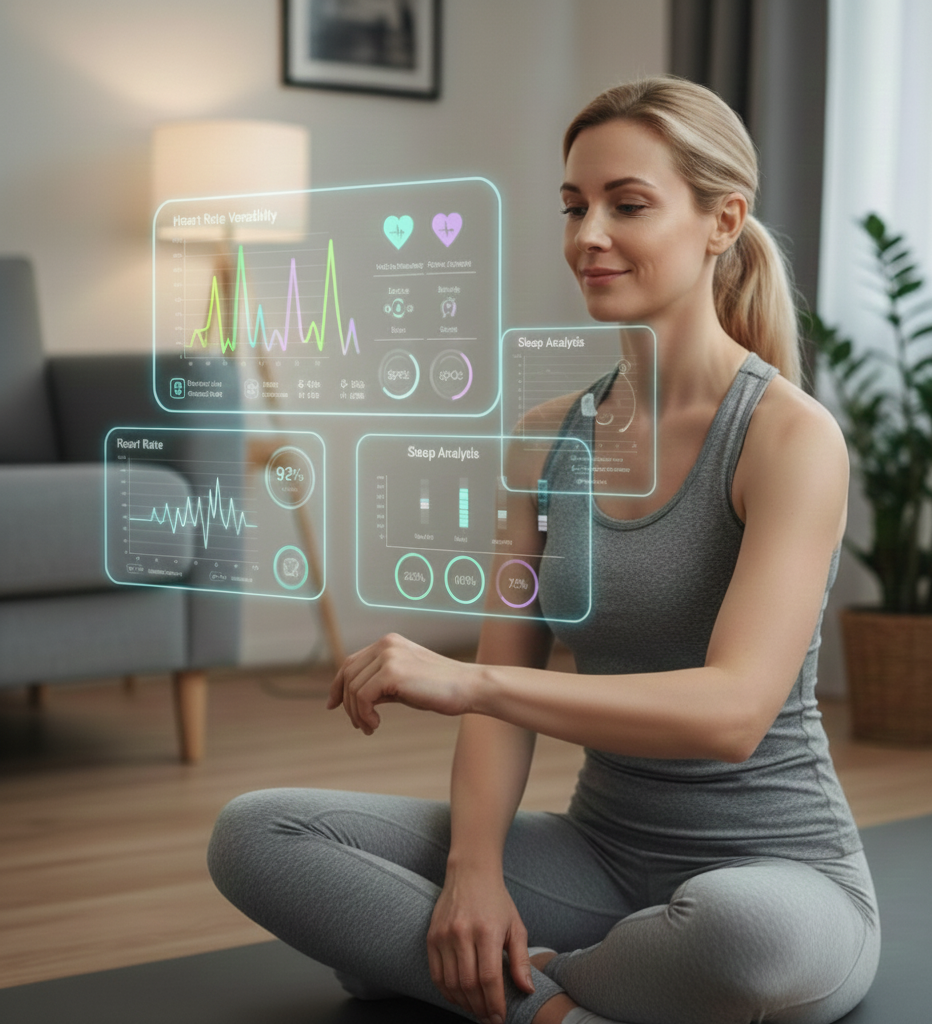
As we enter a more advanced digital health era, wearable technology health trends 2026 are reshaping how individuals understand and manage their well-being. Wearable devices are no longer limited to step counting or basic fitness tracking. In 2026, they have evolved into intelligent health companions that continuously support daily health decisions.
Modern wearables help users recognize long-term health patterns instead of focusing only on short-term activity goals. By analyzing sleep quality, heart rate variability, oxygen levels, and stress indicators, wearable devices provide a deeper understanding of overall health.
How Wearable Technology Is Driving Preventive Healthcare in 2026
One of the most impactful aspects of wearable technology health trends 2026 is the shift toward preventive healthcare. Instead of waiting for symptoms to worsen, users can now identify early warning signs through real-time health data.
Wearables can detect irregular heart rhythms, prolonged stress, poor sleep cycles, and fatigue at early stages. This proactive approach allows individuals to make timely lifestyle changes, reducing dependency on emergency medical care and promoting long-term wellness.
Just as these devices act as silent partners in our health, smart living environments are also evolving, a trend beautifully explained in our deep dive into minimalist home trends india 2026: smart ways to declutter and transform living spaces
Role of Wearable Technology in Mental Health Awareness
In 2026, wearable technology plays a growing role in mental health awareness. Stress monitoring, breathing analysis, and sleep tracking are helping users identify emotional imbalance and burnout. These insights encourage healthier routines and better work-life balance.
The expansion of wearable technology health trends 2026 into mental wellness highlights a more holistic approach to health, where both physical and emotional well-being are treated as equally important.
Data Privacy and Responsible Use of Wearable Devices
wearable technology becomes more advanced, concerns related to data privacy and over-monitoring also increase. Health data is highly sensitive, and users must remain aware of how their personal information is stored and shared.
To fully benefit from wearable technology health trends 2026, responsible usage is essential.
Wearables should guide healthier habits rather than create anxiety or unhealthy dependence on numbers. Data should empower, not overwhelm.
The IVH Verdict: Are You Using Your Data Correctly?
”A common question we see at India Viral Hub is: ‘Does more data mean better health?’ Our practical answer for 2026 is: Only if you act on it. Don’t just collect heart-rate charts; look for patterns. At IVH, we believe that ‘Bio-Hacking’ starts with self-awareness. However, as these devices become more personal, we urge you to prioritize Data Privacy. In 2026, your health data is your most valuable asset. Choose devices that offer end-to-end encryption. Remember, a wearable should empower you, not just monitor you.”
The Future of Wearable Technology Beyond 2026
Looking ahead, wearable devices will integrate further with personalized medicine, remote healthcare, and chronic disease management. In 2026 and beyond, wearables will become more accurate, less intrusive, and more seamlessly embedded into everyday life.
Ultimately, wearable technology health trends 2026 indicate a future where individuals are more informed, proactive, and engaged in their health journey. These smart devices are not replacing healthcare professionals; they are strengthening personal health awareness.
This shift towards health intelligence is a cornerstone for anyone committed to long term fitness 2026: smarter strategy for stronger, healthier life where data-driven insights replace guesswork.